TRUE Initiative opposes changes to New York City’s anti-idling program
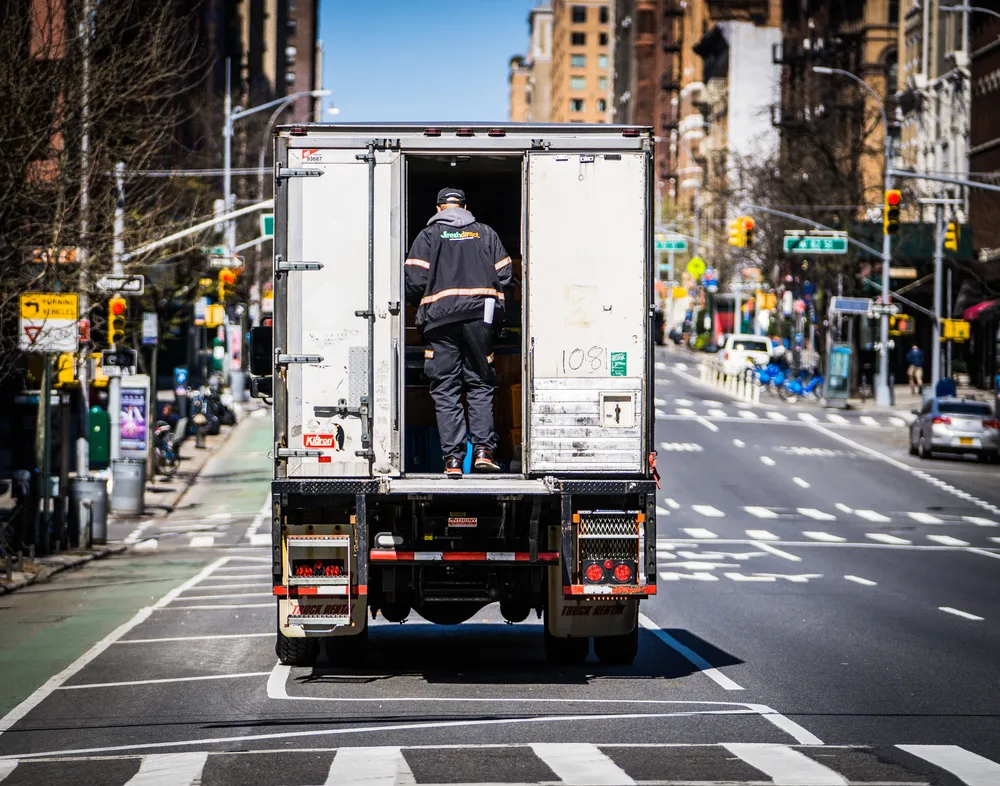
Proposed policy under the New York City Council seeks to limit the scope of anti-idling registration and allow loopholes for heavy-duty diesel truck regeneration.
New York City is home to some of the most concentrated transportation pollution hotspots in the United States, largely due to high traffic of diesel heavy-duty vehicles. Idling can be a major source of local, neighborhood-level pollution and prolonged exposure to these pollutants causes negative health impacts including premature death and new cases of pediatric asthma.
Currently in New York City, residents can report excess idling in their neighborhoods under the Citizen Air Complaint Program, earning them 25% of the resulting fines. Proving the success of the program, earlier this year the city recovered more than $9 million in unpaid idling fines from Amazon alone. However, recently introduced legislation (Intro. 561-A) would essentially stunt the program by allowing exemptions for diesel particulate filter (DPF) regeneration, among other proposed changes.
Most diesel heavy-duty vehicles manufactured from 2007 on are outfitted with DPFs, which require periodic regeneration to burn off the particles that have built up in the filter. Regeneration can occur in one of three ways:
- Passive regeneration, taking place passively during driving if exhaust temperatures are sufficiently high, typically during high-speed driving.
- Active regeneration while driving, typically triggered automatically by the engine control unit when certain conditions are met.
- Active regeneration while parked, typically triggered by the driver.
Passive regeneration is associated with a smaller air pollution impact and is typically preferred by drivers to avoid using additional diesel fuel, which is required during active regeneration. Compared with active regeneration, passive regeneration has been shown to emit over 90% less particulate matter. Active regeneration is associated with a substantial air pollution impact, with particulate number emissions up to 246 times higher than during normal vehicle operation.
Parked active regeneration, while sometimes necessary, is rarely urgently required amid operation. A steady warning light on the dashboard first signals that the DPF needs regeneration, providing the driver adequate time to find a suitable location away from densely populated areas to perform the active regeneration.
As proposed in Intro. 561-A, a full exemption from anti-idling fines for cases of DPF regenerations could lead to an increase in heavily polluting DPF regenerations in densely populated areas. Without requiring proof of DPF regeneration from the vehicle’s diagnostic system or picture of the dashboard to justify the idling when targeted under complaint, unnecessary idling unrelated to DPF regeneration could increase.
Based on its research of emissions in New York City, and other comparable pollution hotspots in the US, the TRUE Initiative provided written comments on the proposed legislation to the city’s Committee on Environmental Protection and Waterfronts.
“Anti-idling programs provide huge benefits for the residents of New York City who live near freight corridors. The proposed changes to the Citizen Air Complaint Program would curtail the progress made towards improving air quality in these neighborhoods,” said Michelle Meyer, researcher at the International Council on Clean Transportation, and TRUE’s technical partner. “Instead, focusing attention on improving the program’s language access as proposed by Intro. 48 would help people living in the most polluted boroughs better address local air pollution.”
A 2022 study by the TRUE Initiative highlighted that the burden of diesel truck pollution in New York City is uneven, and people of color living are exposed to 16% higher levels of fine particulate matter from diesel truck emissions compared to non-Latino white residents.
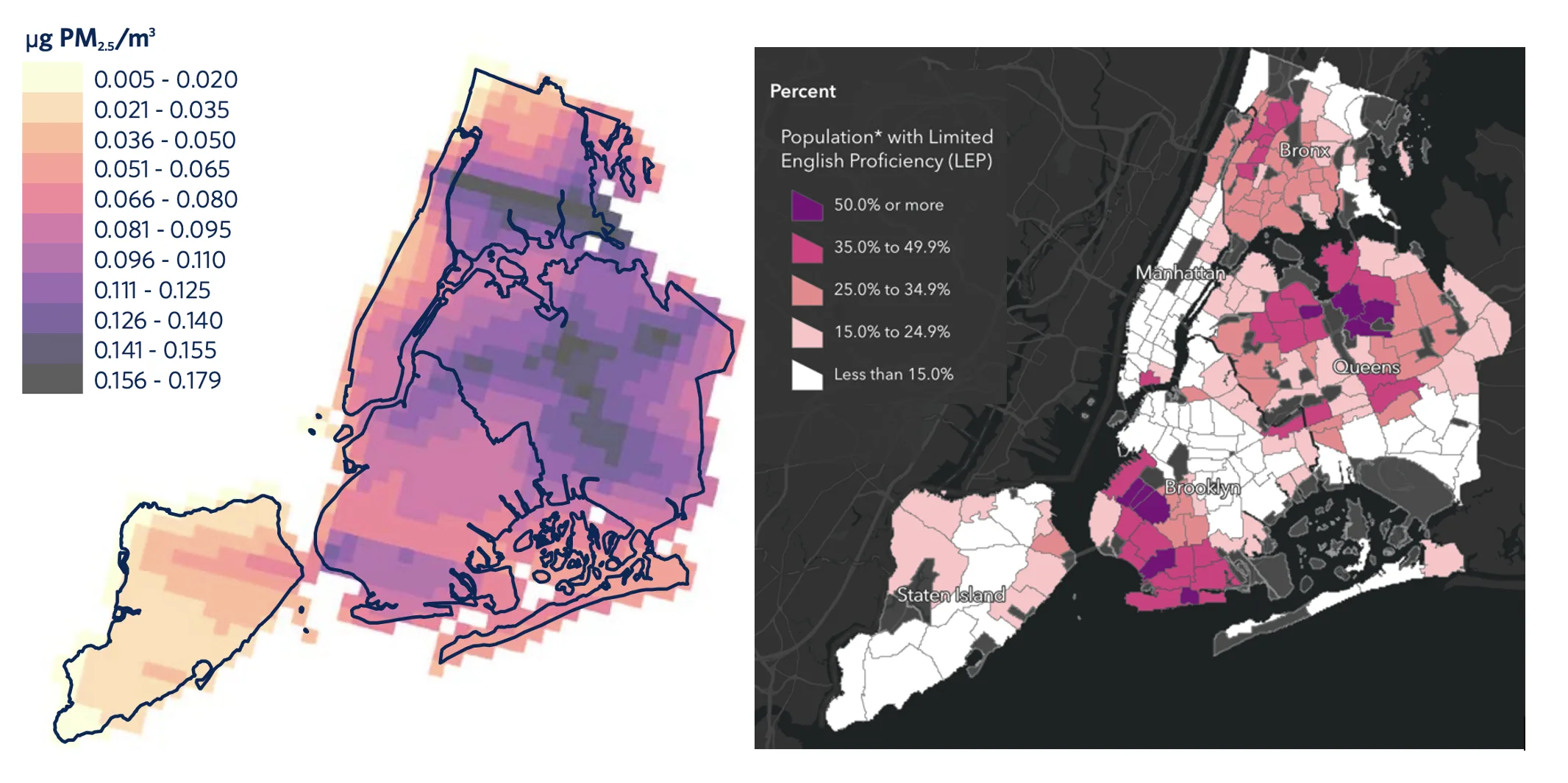
Areas of the city with the highest levels of these emissions—parts of the Bronx, Queens, Southwestern Brooklyn—are also areas where a substantial share of the population has Limited English Proficiency. Providing greater access for those with Limited English Proficiency by translating the program into the city’s 10 designated languages would create more opportunity for residents in the most heavily polluted neighborhoods to improve their local air quality.
As other cities look to address the environmental justice issue of truck idling in residential neighborhoods, New York City provides a strong example of a program that has effectively reduced emission hotspots through targeted, localized solutions.
To read the full public comments, please download here.